

What is Bovine Bone Gelatin
Release time:
Apr 19,2024
Bovine Bone Gelatin meaning:
Bovine bones are primarily composed of inorganic minerals (approximately 60-70% of dry weight, mainly calcium phosphate), organic matrix (approximately 30%, of which 90% is collagen), and water.
Bovine bone gelatin is typically processed from fresh bovine bones. It is a protein product derived from the partial hydrolysis of collagen found in bovine bones and connective tissue via an alkaline process. It is classified as a polydisperse mixture of polypeptides.
Key Characteristics of Bovine Bone Gelatin
Physically, bovine bone gelatin appears as a light-colored, colorless to yellow flake or granular powder. It is odorless and tasteless, containing essential amino acids. It possesses specific physicochemical properties, including molecular weight distribution, amino acid and substituent composition, gelling rate, Bloom value, and viscosity.
1. High Bloom Strength and High Viscosity
- Bloom Strength: The Bloom strength of bovine bone gelatin typically ranges between 150-280 Bloom. This is generally higher than pork skin gelatin of the same grade, making it beneficial for film-forming and thickening.
- Application Insight: High Bloom strength (>240 Bloom) is a critical requirement for hard capsule production.
- Viscosity: Typically ranges from 3.0-5.0 mPa·s.
- Application Insight: Type B bovine bone gelatin usually possesses higher viscosity than Type A pork skin gelatin of the same Bloom strength, offering advantages in thickening and film-forming applications.
2. Low Isoelectric Point (Typical Type B Gelatin)
Because collagen in bovine bones has dense cross-linking, and to remove non-collagenous impurities from the bones, the industry universally adopts a long-duration alkaline (liming) process. This process not only hydrolyzes cross-links but also triggers the deamidation of asparagine and glutamine, converting them into aspartic acid and glutamic acid.
This causes the isoelectric point (pI) of Type B gelatin to drop significantly, usually falling within the acidic range of 4.8-5.2. This chemical characteristic determines the unique status of bovine bone gelatin in pharmaceutical formulations and compounded food systems.
In food and beverage formulations, if the pI is not considered, gelatin may undergo electrostatic interaction with other charged colloids (such as negatively charged pectin or carrageenan), leading to flocculation or precipitation. Leveraging this characteristic, bovine bone gelatin is often used for complex coacervation phase separation in microencapsulation technology.
3. Higher Melting Point (~35°C) and Faster Setting Rate
Bovine bone gelatin is composed of 18 amino acids. Its uniqueness lies in the extremely high content of imino acids—Proline and Hydroxyproline. The presence of hydroxyproline is crucial for stabilizing the three-dimensional structure of collagen and gelatin.
Research data indicates that while the imino acid content of bovine bone gelatin is slightly lower than that of pork skin gelatin, it is significantly higher than that of fish gelatin (especially cold-water fish gelatin). This difference directly results in bovine bone gelatin having a higher melting point (~35°C) and a faster gelling rate, whereas the melting point of fish gelatin is often below 25°C.
4. Narrow Molecular Weight Distribution and High Purity
It features a narrower distribution with relatively low high-molecular-weight components and low heavy metal content. Photographic gelatin is extremely sensitive to iron (Fe) and copper (Cu). Bovine bone gelatin has low nucleic acid content and fewer impurities, providing stable photographic performance, making it suitable for preparing photosensitive emulsions.
what is bovine bone gelatin made of?
The production of bovine bone gelatin is a multi-stage process that must be strictly controlled to ensure product quality and safety. The extraction process involves sorting, degreasing, washing, neutralization, hydrolysis, and other techniques.
Raw Material Pretreatment
- Source: Primarily fresh bovine leg bones ("green bones") from slaughterhouses are selected.
- Key Steps: The leg bones undergo crushing, degreasing, and washing to obtain degreased bone chips. The age of the animal impacts collagen cross-linking; bones from calves have less cross-linking and are easier to extract but often lack mineralization and sufficient strength, while the reverse is true for adult cattle.
Acid Demineralization
Bone chips are treated with dilute hydrochloric acid to dissolve hydroxyapatite, resulting in soft, porous ossein. The by-product is dicalcium phosphate.
Alkaline Liming (Core Process)
The ossein is soaked in saturated lime water for 8-12 weeks. This step serves a dual purpose:
- Destruction of collagen cross-links;
- Triggering deamidation reactions, increasing carboxyl content, lowering the isoelectric point, and forming the characteristics of Type B gelatin.
Extraction and Refining
- Multi-stage Gradient Extraction: Extraction begins at low temperatures (approx. 60°C) and the temperature is gradually increased. The first extraction yields the best quality gelatin (high Bloom and high transparency).
- Refining Steps: The product undergoes filtration, ion exchange (to reduce ash), UHT sterilization, and low-temperature drying to ensure high purity and safety.
BOVINE BONE:Health Safety and Religious Compliance
1. Prion Theory and Risk Control
The pathogen of BSE (Bovine Spongiform Encephalopathy) is the Prion, an infectious, abnormally folded protein highly resistant to heat, radiation, and conventional disinfectants. Since bones (especially the spine containing the spinal cord) are anatomically close to high-risk central nervous tissues, bovine bone gelatin was once considered a high-risk substance. However, after decades of scientific research and regulatory upgrades, bovine bone gelatin is now confirmed safe, provided strict production standards are followed.
2. International Regulations and Safety Certification
European Pharmacopoeia (Ph. Eur.)
Monograph 1483 details requirements to reduce TSE (Transmissible Spongiform Encephalopathy) risks. Core measures include:
- Raw Material Source: Must come from healthy animals inspected and fit for human consumption. Sourcing countries are categorized as "Negligible Risk," "Controlled Risk," or "Undetermined Risk" according to OIE standards.
- Specific Risk Material (SRM) Removal: For cattle over 30 months old from controlled-risk countries, high-risk tissues such as the skull, brain, eyes, spinal cord, and vertebral column must be removed.
- Process Inactivation: Scientific research confirms that the alkaline liming process (pH > 12.5, long duration) combined with subsequent acid treatment and high-temperature sterilization possesses extremely high prion clearance capability (Log Reduction Value > 4-5). Therefore, the EFSA and SSC have confirmed that the BSE risk of compliant bone gelatin is extremely low or zero.
US FDA Regulations (21 CFR 189.5)
The FDA explicitly states that while many bovine-derived materials are listed as "Prohibited Cattle Materials," gelatin is explicitly exempted. As long as its production employs standard industry processes including filtration and sterilization, it is considered safe.
3. Religious Compliance: Halal and Kosher
Beyond safety, religious certification is another "passport" for bovine bone gelatin to enter the global market. Since pork skin gelatin is strictly prohibited in Islam and Judaism, bovine bone gelatin has become the preferred alternative.
Deep Contradictions in Halal Certification
- The Slaughter View (Mainstream): Represented by agencies like JAKIM (Malaysia) and MUI (Indonesia), this view insists the source must be Halal. The bovine bones used for extraction must come from cattle slaughtered according to Islamic law (Zabiha). This requires the supply chain to achieve full segregation to ensure no mixing with non-Halal bone sources.
- The Istihalah (Transformation) View: Some Middle Eastern scholars argue that under intense chemical action (acid, alkali, heat), the essence of the bone has undergone a complete change (Istihalah) into a new substance (gelatin) and no longer retains its original "impure" attributes.
- Market Reality: Despite the theoretical support for Istihalah, global mainstream gelatin manufacturers usually adopt the stricter "Slaughter View" standards and establish dedicated Halal production lines to access core markets like Indonesia.
Specifics of Kosher Certification
For Judaism, bovine bone gelatin is typically certified as Pareve (neutral), meaning it can be consumed with dairy products.
- Mainstream Standards (OU): Modern mainstream certification agencies (such as the Orthodox Union - OU) are strict; bovine bones used for Kosher gelatin must come from Kosher-slaughtered (Shechita) cattle.
- While Kosher fish gelatin is popular, Kosher bovine bone gelatin remains a high-end necessity for pharmaceutical capsules requiring high strength.
Enterprises Must Establish Batch Records and Traceability
- Traceability: Full traceability from the customer back to the supplier (bone source) is mandatory to address safety risks like BSE.
- Compliance Basis: Records are key evidence for product release, quality audits, and regulatory inspections (e.g., GMP).
- Sound Management System: Divided into "Document Management" and "Record Management."
- Strict Audit System: Multi-level auditing (Shift Leader -> Supervisor -> Manager), use of indelible ink, and scientific indexing and archiving systems.
The main application areas of bovine bone gelatin
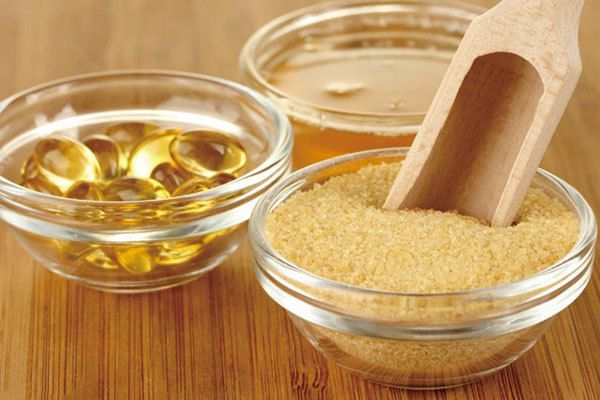
1. Pharmaceutical Industry: An Indispensable Excipient
The pharmaceutical industry is the largest high-value-added market for bovine bone gelatin.
- Hard Capsules: Over 90% of hard capsules globally are made from gelatin. Bovine bone gelatin is the preferred choice due to its high Bloom strength (providing mechanical strength) and high viscosity, forming tough, glossy shells that disintegrate rapidly in gastric fluid.
- Softgels: While softgels often use pork skin gelatin or mixed gelatin, bovine bone gelatin is widely used in formulations requiring higher structural integrity to prevent liquid leakage due to its excellent cross-linking density.
- Hemostatic Sponges & Plasma Substitutes: Bovine bone gelatin sponges (e.g., Gelfoam) absorb dozens of times their weight in blood during surgery. Modified gelatin is used as a plasma substitute.
- Vaccine Stabilizers: Hydrolyzed bovine bone gelatin is used in live attenuated vaccines (MMR, Varicella) as a protectant to prevent virus inactivation.
- Tissue Engineering: Due to its biocompatibility and biodegradability, it is used as a scaffold material and signal molecule carrier.
2. Food Industry: Functionality and Texture
- Confectionery & Desserts (Excipient and Thickener): In gummy production, the high melting point of bovine bone gelatin imparts heat resistance, preventing melting during summer transport while providing an elastic chewiness.
- Clarifying Agent: Utilizing its positive charge, gelatin is used for clarifying wine, fruit juice, and beer by adsorbing negatively charged tannins and suspended particles to form precipitates for removal.
- Nutraceuticals: As a raw material for collagen peptides, enzymatically hydrolyzed bovine bone gelatin is rich in Pro-Hyp dipeptides, which promote osteoblast activity and cartilage matrix synthesis.
3. Photography and Industrial Technology
Photosensitive Materials: Despite the rise of digital photography, in medical X-ray films and professional film fields, bovine bone gelatin remains the best carrier for silver halide crystals. Type B bone gelatin, having undergone long-term liming to remove most active sulfur impurities that could cause "fogging," is known as "inert gelatin" and is a core material for high-sensitivity films.
Additionally, bovine bone gelatin serves as a high-quality biomaterial for tissue or stem cell bioengineering, featuring adjustable functional properties and low endotoxin levels. Overall, bovine bone gelatin is a versatile natural polymer material widely applied in food, pharmaceutical, and cosmetic industries due to its unique physical and chemical characteristics.
Related News
Homemade Gelatin Marshmallows- Fish Gelatin
Jan 29,2026
Is Fish Gelatin Halal?- The Ultimate Guide
Jan 23,2026